featauth/github·Yusuf D.·2 hours ago#4f3a2b1
GitHub OAuth sign-in lands.
First-time users now get a one-click path from landing to workspace. Magic link still works as a fallback.
cross-functional builder workspace
Every great product needs an elf.
One workspace where developers commit code, content contributors add docs and decks, and managers control who sees, touches, or forks anything — without anyone leaving the platform or switching apps.
the problem
Mixed teams — devs, writers, designers, managers — don't fail because the work is hard. They fail because nobody has the same picture of what exists, what's in progress, and what's ready to ship. The cost compounds quietly until it's the reason a launch slips.
3 days
between when a dev ships a feature and when the writer who needs to announce it finds out.
4 tools
the average mixed team uses to coordinate one project — GitHub, Slack, Notion, and a doc nobody updates.
0 shared truth
across the people building, writing, and shipping. Everyone's working from a different page.
don't build by your shelf
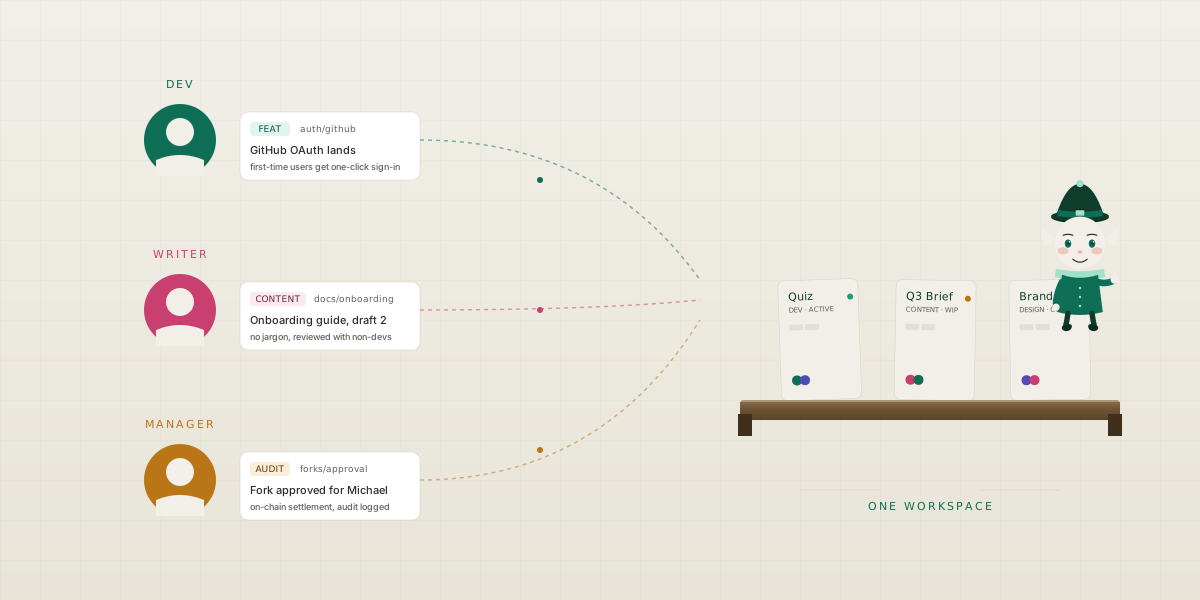
for the dev
Push to GitHub, GitLab, or Bitbucket. Elf reads the commit, parses the type, and broadcasts what changed — in the language each contributor speaks.
for the writer
Drop a deck, link a Notion page, write a brief. Everything attaches to the project. No SHAs, no merge conflicts, no terminal.
for the manager
Per-project, per-member permissions. One activity feed. Fork requests need a deliberate two-step approval — you'll never accidentally hand out the keys.
the commit system
Elf extends Conventional Commits with eleven types — including content, audit, and ref. The same commit speaks SHA to your dev and plain English to your writer. Nobody sees a wall of jargon they can't interpret.
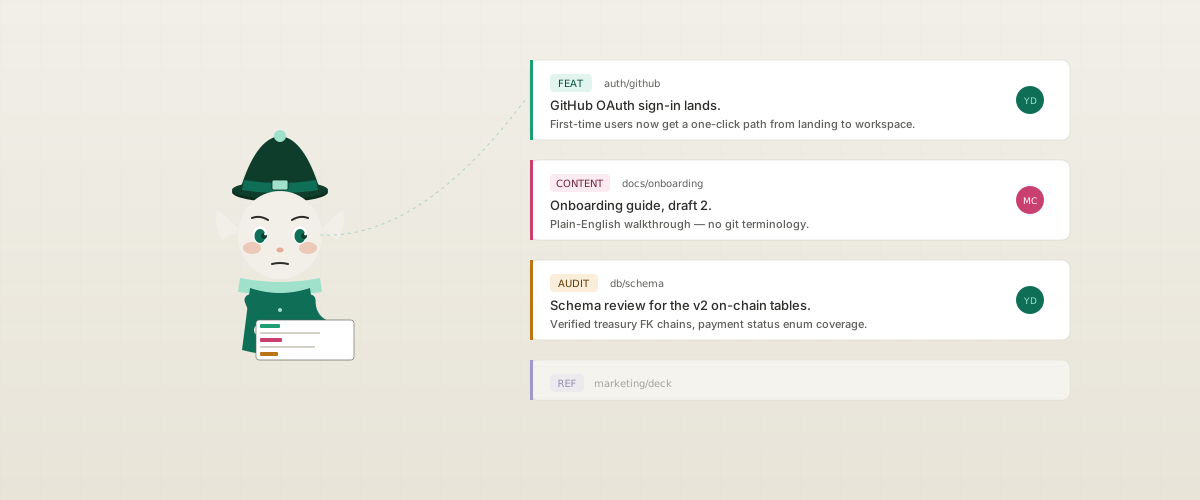
GitHub OAuth sign-in lands.
First-time users now get a one-click path from landing to workspace. Magic link still works as a fallback.
Onboarding guide, draft 2.
Plain-English walkthrough — no git terminology. Reviewed with two non-technical contributors before merging.
Schema review for the v2 on-chain tables.
Verified treasury FK chains, payment status enum coverage, idempotency on KeeperHub workflow IDs.
who it's for
Mixed-team product work isn't one shape. Whether you're a duo on a side project or an agency running ten engagements, Elf adapts to how your team is actually wired.
indie builder
Your content partner gets a real place to draft launch copy, drop screenshots, and react to your commits — without ever opening a terminal.
small agency
Per-project permissions mean a freelance writer never sees the production repo. A subcontractor sees exactly the project they're billed for. Client visibility on demand.
founding team
Each role gets the view they need: a code log for engineering, a content shelf for marketing, a fork-approval queue for whoever's holding the keys to main.
product operator
Manage every project, every contributor, every approval from a single shelf. The activity feed is your morning standup — read it once and you're caught up across all of it.
built to last
Most workspace tools are a single point of failure — if the company shuts down, your team's history shuts down with it. Elf is built differently. The parts that matter — your audit log, your payments, your team's private conversations — don't depend on us being around to read them back.
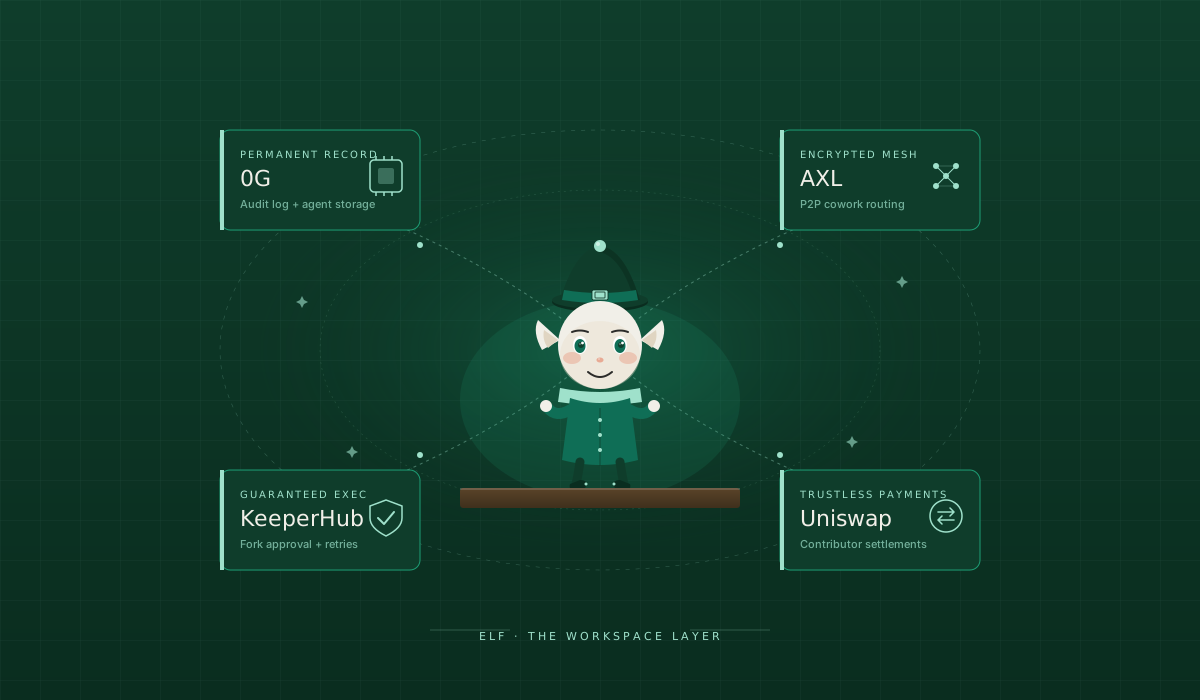
permanent record
Every commit, fork approval, and contributor payment is content-addressed and tamper-proof. If Elf disappeared tomorrow, your project history stays verifiable. We use 0G's permanent storage layer underneath — you'll never see it, but you'll feel it the day you need to prove what shipped, when, and who approved it.
encrypted collaboration
Multi-party AI workspaces route through an encrypted peer-to-peer mesh. There's no central inbox watching your team think out loud. The dev, the writer, the manager, and the AI agent all talk on the same channel — privately, end-to-end, no third-party server in the middle.
guaranteed execution
When a manager approves a fork, the GitHub call runs through a guaranteed-execution layer with retries, full audit trail, and on-chain settlement. No more 'I approved it three days ago' / 'I never got it' confusion. Either it shipped, or you get a clear failure with a manual override.
trustless payments
Project treasuries hold USDC. Approve a contributor's commit, they get paid — in USDC, ETH, or whatever they prefer. No invoicing dance, no payment processor delay, no exchange-rate fight. The contributor walks away with the money they earned, in the asset they wanted.
pricing
Start free. Upgrade when your team grows past three people or you want to pay contributors on-chain. Cancel anytime — your data and audit log come with you.
Free
$0
Kick the tires. Spin up a workspace and a few projects.
Builder
$19/ month
For indie builders and small mixed teams shipping real work.
Studio
$49/ month
For agencies, founders, and operators running multiple products.
Need SSO, GitHub Enterprise, custom retention, or a dedicated support channel? Talk to us about Enterprise.
questions
No. Elf sits on top of GitHub (and GitLab and Bitbucket) — your code stays exactly where it lives today. Elf is the workspace layer that lets non-technical contributors participate without ever opening a terminal.
Never. Content contributors see plain-English commit summaries, attach docs and links, and react to project updates. The words 'fork', 'rebase', and 'merge' don't appear anywhere in their view.
It's how a contributor asks for their own copy of a project to work in. In Elf, the project manager has to deliberately approve each one — so production never gets a surprise pull request from someone who shouldn't have access. We make accidental approvals impossible.
Yes. Every commit, fork approval, and contributor payment is written to a tamper-proof audit log. You can verify any historical event independently — even if Elf disappeared tomorrow, your record stays intact.
Optional and opt-in. Each project can have a USDC treasury. When a manager approves a feat or content commit, the contributor gets paid — in USDC by default, or in any token they prefer. No invoices, no Stripe round-trips.
Yes. Cancel from settings, no support ticket required. You keep access through the end of your billing period, and your audit log and project data export to GitHub or stay readable on the permanent log.
elficiency unlocked
Closed beta is opening soon for indie builders, small agencies, and startup founders running mixed teams. Drop your email, we'll send an invite the moment a slot opens.
no spam — one email when your slot opens